Thinking about buying mini-farm land in Alexander County? It is easy to picture the barn, garden, orchard, and open pasture, but the right tract needs more than pretty views. If you want land in the 28636 area that truly works for your goals, you need to look closely at zoning, soil, water, access, and build rules before you make an offer. Let’s dive in.
Why Alexander County Fits Mini-Farm Buyers
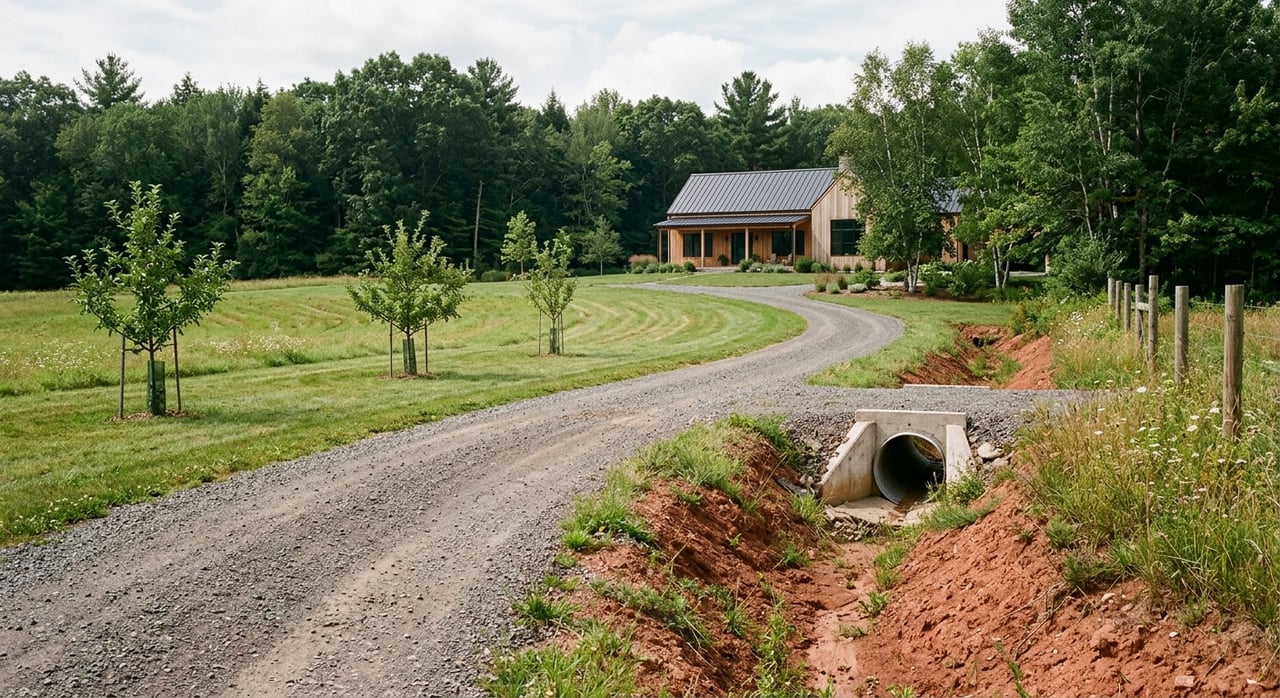
Alexander County has a strong rural character, and about two-thirds of the county is farmland. That makes mini-farm and homestead use a natural fit for the area, especially for buyers who want space for gardens, pasture, orchards, or small-scale farm animals.
The county’s agriculture definition is broad, which gives you useful context as you plan your future property. It includes uses such as fruit and nut production, pasture for cattle, horses, sheep, and goats, plus bees and other farm-animal uses. If you are imagining a hobby farm or a small homestead, that flexibility matters.
Start With the Land’s Real Use
A mini-farm is only as good as the land itself. Before you get attached to a parcel, think about how you want to use it and whether the tract supports that use in a practical way.
If you want an orchard or fruit trees, site selection matters more than many buyers expect. NC State Extension notes that sunlight, soil properties, water availability, temperature swings, and air drainage all play a major role, and low or wooded spots can create frost and drainage issues.
If you want pasture, open ground and manageable topography can make a big difference. If you want a homesite too, you will also need to think about where the house, driveway, septic area, and well could realistically go without crowding the farm use.
Check Zoning Before You Offer
One of your first steps should be confirming zoning in the county GIS. Alexander County says you can check zoning by address, PIN, or parcel ID, and you can also review the Future Land Use Map there.
The county’s zoning summaries include districts such as R1, R2, R3, R2R, OI, MU, CC, RC, I, and WR. Just as important, the county land development code says agriculture is allowed in all general use districts, and some farming structures and activities may be exempt from zoning review.
That said, do not assume every idea you have will be treated the same way. A parcel may support agricultural use, but your building plans, setbacks, or future improvements may still need review. Alexander County also says parcels may not be split-zoned, which can simplify some zoning questions when you are evaluating one tract.
Watch for Voluntary Agricultural District Status
Some parcels may be enrolled in the Voluntary Agricultural District program. The county says the GIS map will flag that status and alert buyers that they may experience farm noise, odors, and other normal agricultural activity.
For many mini-farm buyers, that is not a drawback at all. In fact, it can help set the right expectations about the surrounding area and support long-term agricultural use nearby.
Soil and Drainage Matter More Than the Listing Photos
Beautiful photos can hide weak soils, drainage problems, or a poor homesite. That is why land buyers should review soil information early, then follow up with onsite evaluation where needed.
The USDA NRCS says Web Soil Survey is the official online source for current soil survey information. It is a strong starting point for understanding a tract, but it does not replace onsite investigation for some conservation and engineering decisions.
For orchard-style use, NC State Extension recommends testing soil pH and drainage early. Many fruit trees prefer a pH between 6.0 and 6.5, and standing water left in a test hole after 24 hours can signal a drainage problem.
Septic and Well Planning Comes Early
If the property will need a private septic system and well, do not wait until after grading to ask questions. Alexander County Environmental Health says buyers should apply for the septic Improvement Permit or Authorization to Construct before grading.
The county also says that if a well is needed, the well permit should be filed at the same time as the septic permit. That allows the well site to be evaluated together with the wastewater layout, which can help avoid conflicts on the property plan.
The county’s site-plan checklist asks for items such as easements, structures, wastewater systems, wells, springs, water lines, and surface waters. In practical terms, that means your ideal house site may not be the final workable site once all systems are mapped out.
Review Flood and Watershed Limits
Flood and watershed review can change how usable a tract really is. A parcel may look ideal on the ground, but overlay rules can affect where and how you build.
North Carolina emergency management says Alexander County’s revised digital flood-hazard data are available through FRIS. Buyers should review those flood layers carefully, especially if a creek, bottomland, or low area is part of the appeal.
Watershed overlays also matter. Depending on the subdistrict, county rules can tighten density, lot size, and vegetative setback requirements. In some areas, single-family density can be limited to one dwelling per 2 acres, one per acre, or one per one-half acre, and some locations require 100-foot or 30-foot vegetative setbacks along perennial waters.
Make Sure Access Is Legal and Permanent
Access can make or break a land purchase. A tract that looks private and peaceful still needs legal, permanent access if you plan to build or divide it later.
Alexander County’s subdivision regulations require at least 30 feet of frontage on an existing public road, or a private right-of-way at least 30 feet wide leading to a public road. If frontage and off-site access cannot be met, the maximum subdivision density can drop to one lot per acre.
The county also requires proof that private access is legal, permissible, and permanent. This is one of the most important details to verify before closing, especially on larger rural tracts or land reached by shared drives or old farm roads.
Understand Utilities in Hiddenite and 28636
Utility availability varies across Alexander County. That is especially important in and around Hiddenite and the 28636 ZIP code, where some tracts may have nearby utility service and others may rely on private systems.
According to Alexander County Economic Development, municipal water is provided by the City of Hickory and EnergyUnited Water Corporation. Sewer service is provided by the Town of Taylorsville in central and eastern parts of the county and by Hickory in the Bethlehem community.
Electric service comes from Duke Energy and EnergyUnited Electric, and natural gas availability depends on location. For many rural tracts, the key question is simple: is service actually available at the road, or will you need a private well and septic system?
Know the County Build Rules
Before you buy, make sure your next steps line up with the county process. Alexander County says a zoning permit is required for new structures, additions, moving structures, and similar changes, and the application must include a site plan.
Zoning permits expire six months after approval if work has not started. After zoning approval, buyers must complete the Improvement & Operations Permit with Environmental Health before a building permit can be issued.
There is also one simple rule that matters for some rural land buyers: RVs cannot be used as a primary residence anywhere in the county. If your plan involves temporary living arrangements while you build, you will want to understand that early.
Earthwork and Grading Can Trigger Review
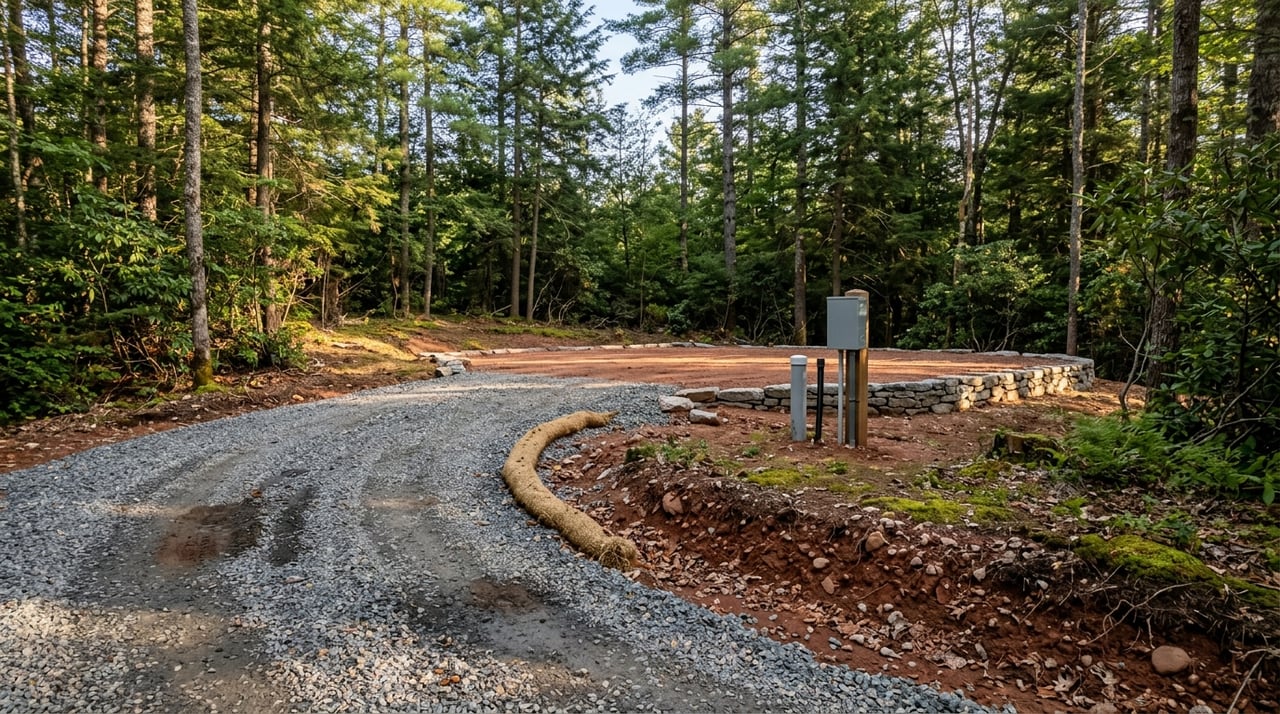
Raw land often needs clearing, grading, or driveway work before construction begins. In Alexander County, land-disturbing activity over one acre generally requires erosion-control plan approval.
Activity under one acre is exempt from that specific plan requirement, and the county code excludes agriculture, forestry, and livestock-related activities from that subpart. Even so, graded slopes still must be stabilized and vegetated within the stated timelines.
That means you should not think of grading as a casual weekend project. If the tract needs significant site work, it is smart to understand those requirements before you commit.
Price Per Acre Can Vary a Lot
Land pricing in the Hiddenite and 28636 area can vary widely. Current examples in the market show a broad spread, from larger raw tracts at a much lower price per acre to smaller, more homesite-ready parcels at a much higher price per acre.
Recent examples include 14.55 acres at about $14,777 per acre, 22.3 acres at about $14,798 per acre, 52.15 acres at about $9,760 per acre, 307.53 acres at about $4,065 per acre, 21 acres at $7,000 per acre, and a 3-acre lot at about $96,333 per acre.
The takeaway is simple: smaller parcels with easier access, clearer homesite potential, or more development readiness can command a strong premium. Looking only at acreage without considering readiness can lead you to the wrong conclusion about value.
A Smart Mini-Farm Buyer Checklist
If you are serious about buying mini-farm land in Alexander County, keep your due diligence focused on the basics that affect usability and cost.
Here is a practical checklist to work through:
- Confirm zoning in the county GIS
- Review the Future Land Use Map
- Verify road frontage or legal permanent access
- Run the tract through Web Soil Survey
- Request septic and well evaluations before grading
- Check flood and watershed layers
- Review deed restrictions and easements
- Look for any Voluntary Agricultural District status
- Confirm whether utilities are actually available at the road
Alexander County Soil & Water also offers free soil surveys, farm-conservation planning, and cost-share help for practices such as new ponds, new wells, and conservation irrigation. For buyers who want to improve land over time, that local support can be valuable.
Why Local Guidance Helps With Land
Mini-farm land is not a simple purchase. Two parcels with the same acreage can have very different value depending on access, soils, water, buildability, and long-term use.
That is where local, relationship-first guidance matters. When you are comparing rural tracts in Alexander County, it helps to have a real estate team that understands acreage, raw land, and the practical questions that come with buying outside a typical neighborhood setting.
If you are exploring mini-farm land in Hiddenite or elsewhere in Alexander County, Bootstrap Ventures LLC, DBA Harper Realty can help you evaluate land with a clear, local perspective and a practical eye for what works.
FAQs
What should you check before buying mini-farm land in Alexander County?
- You should confirm zoning, future land use, legal access, soils, septic and well potential, flood and watershed overlays, deed restrictions, easements, agricultural district status, and utility availability.
Can you use land for agriculture in Alexander County zoning districts?
- Alexander County says agriculture is allowed in all general use districts, though your building plans and certain improvements may still need review.
Do you need septic approval before grading land in Alexander County?
- Yes. Alexander County Environmental Health says buyers should apply for the septic Improvement Permit or Authorization to Construct before grading.
Should you apply for well and septic permits together in Alexander County?
- Yes. If a well is needed, the county says the well permit should be filed at the same time as the septic permit so both can be evaluated together.
How do you check flood maps for land in Alexander County?
- North Carolina emergency management says revised digital flood-hazard data for Alexander County are available through FRIS, which buyers should review during due diligence.
Can you live in an RV on land in Alexander County, NC?
- No. The county Planning Department notes that RVs cannot be used as a primary residence anywhere in the county.